Showing posts with label Mitsubishi. Show all posts
Mitsubishi PX-MiEV Concept (2009)

Mitsubishi PX-MiEV Concept (2009)

SpeedUP
Mitsubishi PX-MiEV Concept (2009)

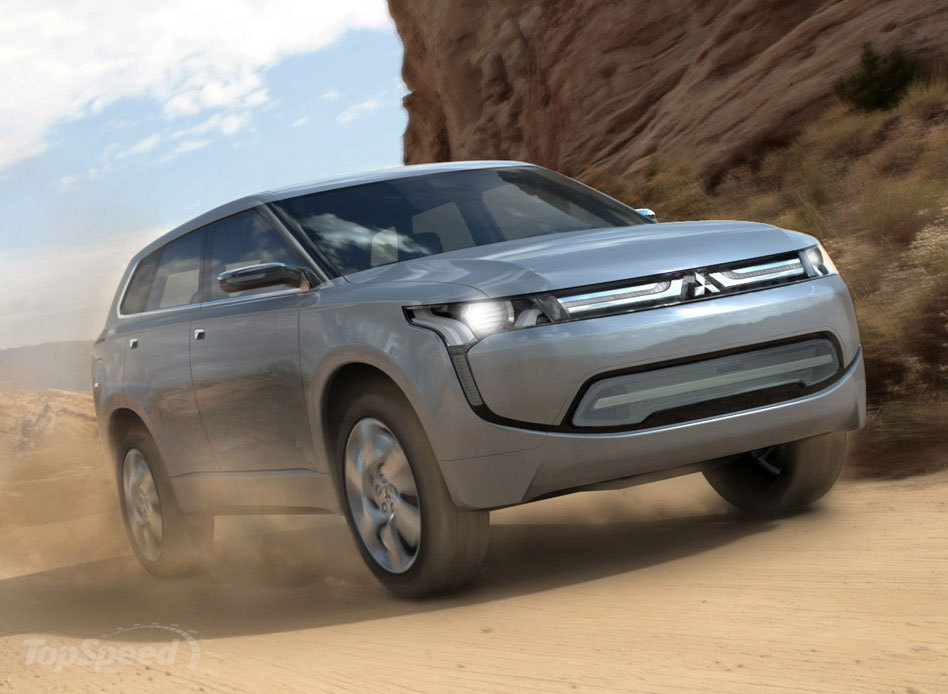
Other features include Mitsubishi's cocochi-interior, which provides occupants with a comfortable cabin environment, as well as many of the latest safety technologies. The Mitsubishi PX-MiEV Concept is a new-generation concept car that balances high environmental performance with road performance by utilizing differential motors and Mitsubishi's all-new S-AWC (Super All Wheel Control), that utilizes E-AYC (Electric-powered Active Yaw Control) which transfers torque to the rear left and right wheels.  Powered by the new Mitsubishi Plug-in Hybrid System, which significantly extends the frequency a hybrid vehicle is driven in EV mode, the Mitsubishi PX-MiEV Concept returns fuel economy in excess of 50 km/liter.


Mitsubishi PX-MiEV Concept (2009)
Mitsubishi i MiEV Sport Air Concept (2009)

Mitsubishi i MiEV Sport Air Concept (2009)

SpeedUP
Mitsubishi i MiEV Sport Air Concept (2009)

One step beyond being merely green, this zero on-road CO2 emission racy concept builds upon those EV fundamentals, marrying: the powerful accelerations and high torque inherent to electric motors, the safe driving dynamics that stem from i MiEV's lithium-ion battery pack, ideally located within its long wheelbase and the low center of gravity it therefore implies. Blending sporting heritage with EV leading expertise, Mitsubishi Motors has just taken that upside down view to create the clear removable top Mitsubishi i MiEV Sport Air Concept, premiered at the 2009 Geneva Motor Show.  Whilst the idea of an electric sports car (or simply electric fast car, witness the 100 km/h record-breaker back in 1899) is not new, not much thought have been given so far to consider electric vehicle (EV) fundamentals as sports car material...

Mitsubishi i MiEV Sport Air Concept (2009)

Mitsubishi Lancer Evolution X FQ-400 (2010)

SpeedUP
Mitsubishi Lancer Evolution X FQ-400 (2010)

Depending on the conditions the driver can select the most suitable set-up for the S-AWC system, three choices - Tarmac, Gravel and Snow - being offered via the wheel-mounted button and displayed in the central instrument binnacle. The S-AWC system combines a number of electronic systems that both enhance the FQ-400's performance and safety, with Active Stability Control and Active Centre Differential, Active Yaw Control and Sport ABS giving the Mitsubishi Lancer Evolution X FQ-400 incredible cornering ability, traction and grip. Traction and handling Ensuring all the FQ-400's power is put to good use is Mitsubishi's sophisticated Super-All Wheel Control (S-AWC) four-wheel-drive system which appropriates power to the wheels that can best use it, giving the Mitsubishi Lancer Evolution X FQ-400 quite sensational cross-country performance. With 403bhp and 387lb.ft of torque on offer from its advanced, lightweight aluminium 2.0-litre turbocharged MIVEC (Mitsubishi Innovative Valve timing Electronic Control) petrol engine the FQ-400 is able to reach 62mph from standstill in an estimated 3.8 seconds before reaching an electronically limited 155mph - where permitted.

  The Mitsubishi Lancer Evolution X FQ-400 is the fastest and most extreme version of Mitsubishi's motorsport derived machine.


Mitsubishi Lancer Evolution X FQ-400 (2010)
Mitsubishi Outlander GT (2010)

Mitsubishi Outlander GT (2010)

SpeedUP
Mitsubishi Outlander GT (2010)

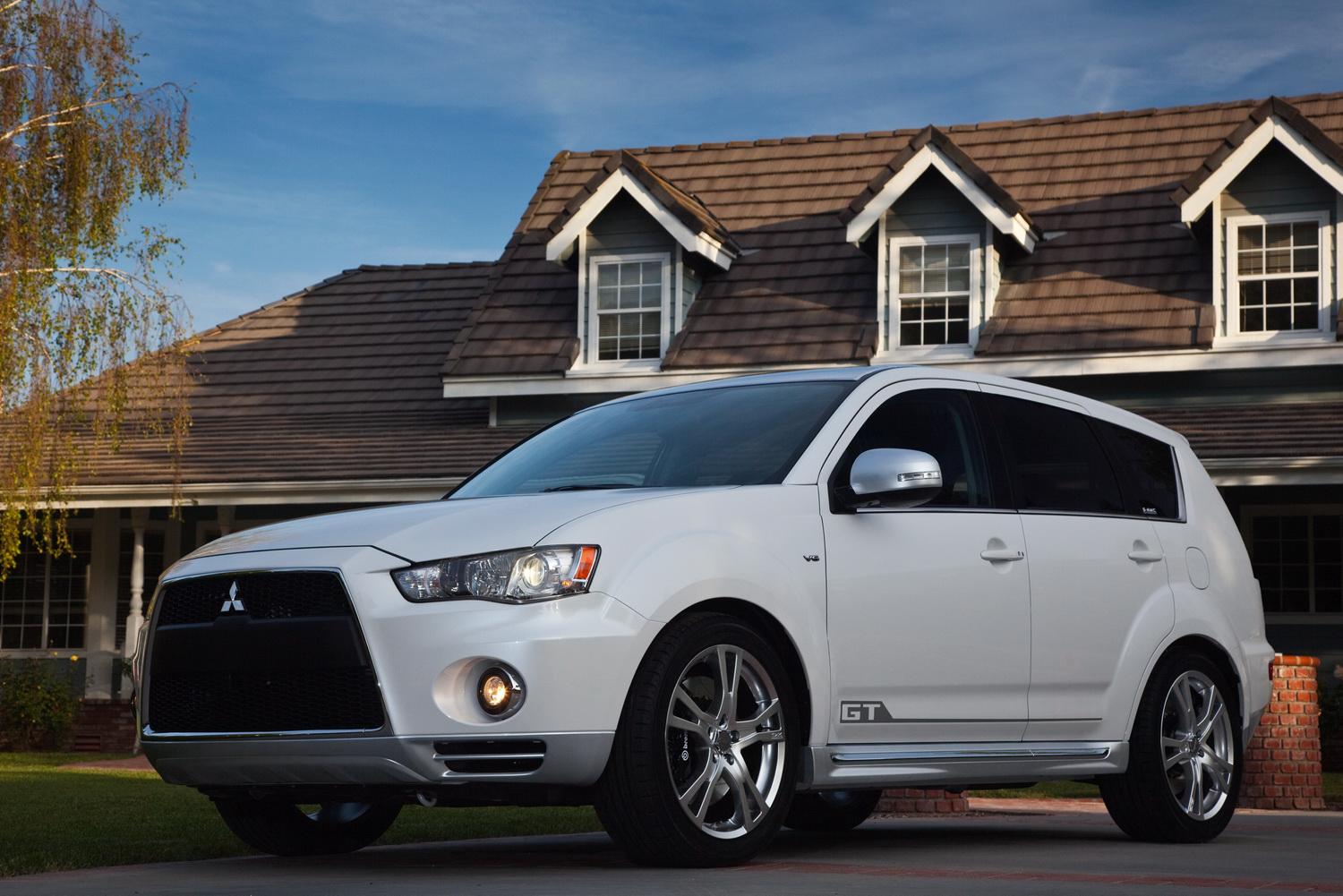
 The increased engine efficiency has also allowed the Mitsubishi Outlander GT to reduce its carbon footprint and CO2 emissions. of peak torque at 3,750 RPM. By improving the intake efficiency and raising the compression ratio, Mitsubishi engineers have managed to push output to 230 hp @ 6,250 RPM and 215 lb.-ft. Powered by an updated MIVEC-equipped V6 engine, the Mitsubishi Outlander GT offers greater power without sacrificing fuel economy.

 The Mitsubishi Outlander GT receives a revised 3.0-liter V6 engine, teamed with a six-speed sportronic® automatic transmission. A restyled exterior joins an available FUSE Hands-free Link System ™ and the superior all-weather capability of the Lancer Evolution-derived Super-All Wheel Control (S-AWC) system. Occupying the top tier in the Outlander family, the Mitsubishi Outlander GT uses premium materials and advanced features for an upscale feel.  The new-for-2010 Mitsubishi Outlander GT showcases why it's different for a reason with a fresh combination of seven-passenger luxury and road holding control.


Mitsubishi Outlander GT (2010)
Mitsubishi ASX (2011)

Mitsubishi ASX (2011)

SpeedUP
Mitsubishi ASX (2011)

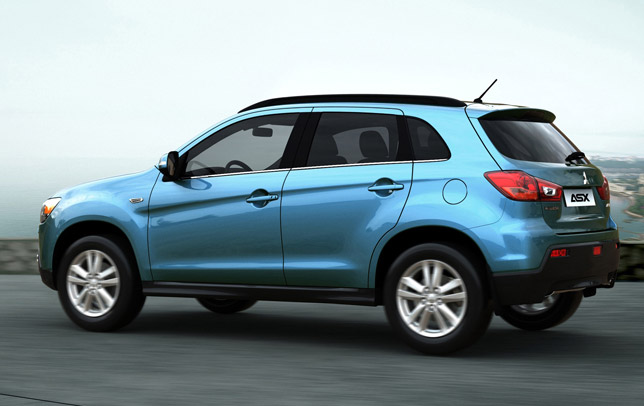
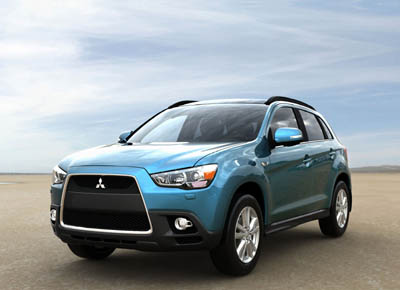
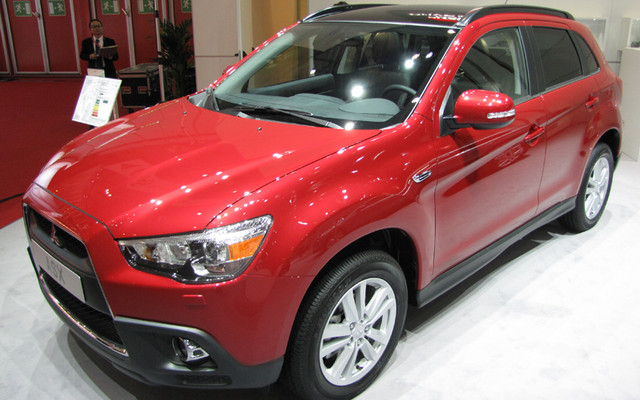
Longer by nearly 20 cm (4.295 m vs the concept's 4.11 m), slightly higher (+ 6.5cm) and wider (+ 2cm), and featuring a more upright tailgate all for the sake of optimum packaging, Mitsubishi ASX shares nonetheless Concept-cX's basic design theme as well as its passenger car-like sure-footed stance. From Concept-cX to ASX reality Sharing the same evocative "Kawasemi Blue" introduction color, the new Mitsubishi ASX represents a marketable interpretation of the Concept-cX show car, unveiled at the 2007 Frankfurt Motor Show, whose success convinced MMC's management to turn it into a full-fledged production car. After its European premiere at the 2010 Geneva Motor Show, it will be retailed in Europe end of spring 2010. Another "global car for the regions" from Mitsubishi Motors and therefore named and specified accordingly, Mitsubishi ASX was first launched in Japan in February 2010 (as "RVR").

  Mitsubishi Motors extends the concept one notch below (C-segment) with the introduction of a smaller and sportier sibling: the all-new Mitsubishi ASX compact crossover.


Mitsubishi ASX (2011)
Mitsubishi CUV (2011)

Mitsubishi CUV (2011)

SpeedUP
Mitsubishi CUV (2011)

A CVT transmission is available on ES trim and electronically controlled All-Wheel Control (AWC) is available on SE models. Standard for all models is a fuel efficient, 148hp MIVEC-equipped 2.0-liter four-cylinder engine. market for 2010: the budget-minded ES with a standard 5-speed manual transmission or the premium SE with a standard sportronic 6-speed CVT with magnesium-alloy paddle shifters. Two trims will be offered in the U.S.

 Active and stylish buyers will also appreciate the available LED-accented Panoramic Glass Roof, 710W nine-speaker Rockford Fosgate audio system and FUSE Hands-free Link system. Boosting the new crossover's list of premium features are such standard technologies as Active Stability Control (ASC), Hill Start Assist (HSA), Electric Power Steering (EPS), a comprehensive seven-airbag safety system, and a cutting edge, high-contrast LCD instrument display. Using lightweight, dent-resistant plastic front fender body panels, regenerative braking and enhanced class-leading aerodynamics, engineers have brought estimated highway fuel economy into the 31mpg range. Designed from the bottom up with a striking design and rigid, lightweight body, the smart-sized crossover combines fuel efficiency with stylish and feature-rich premium performance.  At the 2010 New York International Auto Show, Mitsubishi Motors expanded the Outlander family lineup with the debut of an all-new crossover utility vehicle (CUV).

Mitsubishi CUV (2011)
Mitsubishi Lancer Evolution MR (2011)

Mitsubishi Lancer Evolution MR (2011)

SpeedUP
Mitsubishi Lancer Evolution MR (2011)

market for the 2011 model year: the GSR model that features a short-throw 5-speed manual transmission along with a long list of standard features as well as numerous advanced electronic driver aids including the advanced Super All-Wheel Control (S-AWC) full-time all-wheel drive system and an even better equipped MR edition that includes Mitsubishi's remarkable 6-speed Twin Clutch Sportronic-Shift Transmission (TC-SST). Two versions of the Mitsubishi Lancer Evolution will be offered in the U.S. But the lusty appeal of this instantly recognizable 4-door is not limited just to the North American market; the "Evo" has a rabid fan following throughout the world.  With its rally racing-inspired design, electronic driver aids and potent turbocharged power, the Mitsubishi Lancer Evolution is one of the most capable high-performance sports sedans in the marketplace

Mitsubishi Lancer Evolution MR (2011)

Mitsubishi Outlander Sport (2011)

SpeedUP
Mitsubishi Outlander Sport (2011)

"The all-new 2011 Outlander Sport is a reflection of what happens when Mitsubishi Motors focuses its engineering and design resources on the mission of developing a fun, expressive, affordable, yet eco-friendlier vehicle," said Shinichi Kurihara, President and CEO of MMNA  market: the 2WD ES that features a plentiful standard equipment package as well as a choice of either the manual or CVT transmissions and the more upscale, technology equipped SE edition that is available with either 2WD or 4WD and includes the continuously variable gearbox. The all-new 2011 model year Mitsubishi Outlander Sport models will be offered in two trims for the U.S.  Mitsubishi Motors is adding an all-new model derived from its top of the line crossover, the Outlander: The all-new Mitsubishi Outlander Sport, a slightly smaller version of the popular 7-passenger CUV that features a completely redesigned body, a more fuel-efficient engine paired to either a 5-speed manual or a continuously variable transmission (CVT) and comfortable accommodations for five.

Mitsubishi Outlander Sport (2011)

Mitsubishi RVR (2011)

SpeedUP
Mitsubishi RVR (2011)


 All models qualify for the Japanese eco-car tax reduction (50% tax reduction to promote the popularization of environmentally-friendly cars). The vehicle features a regenerative braking system (high-efficiency electric power generation control), electric power steering, improved aerodynamics and other low-fuel consumption technologies down to fine detail, resulting in a 75% reduction from the Japanese FY 2005 emissions gas standards and exceeding the FY 2010 fuel efficiency requirements by 15%. The power train combines a 1.8-liter, 16-valve DOHC MIVEC engine with an INVECS-III sport mode 6-speed CVT.

 The vehicle is the ideal compact crossover, with ample luggage space for every application from daily driving to leisure outings. With the panoramic field of view of an SUV, the Mitsubishi RVR is easy to drive and provides turn-on-a-dime maneuverability. The new Mitsubishi RVR provides outstanding fuel efficiency from its lightweight, compact body. The Mitsubishi RVR is an ideal compact crossover which achieves superior utility and running performance, excellent environmental efficiency (all models qualify for the Japanese domestic eco-car tax reduction), and a refined interior and exterior in a compact size at an accessible price (¥1,785,000 ~ ¥2,449,650, consumption tax included).

  Mitsubishi Motors Corporation announced that its all-new compact crossover Mitsubishi RVR went on sale throughout Japan from February 17, 2010.


Mitsubishi RVR (2011)

Mitsubishi RVR (2011)
Mitsubishi i-MiEV (2011)

Mitsubishi i-MiEV (2011)

SpeedUP
Mitsubishi i-MiEV (2011)

Books were then opened for private customers as well, the first deliveries to this second wave of Japanese clients taking place from April 2010. Less than 3 years later, once a thorough development process was completed accumulating over 500,000 km of testing, the car was launched in Japan as "i-MiEV" in July 2009 first with fleet customers. Making the best use of the mid-ship architecture of this new urban vehicle, the electric "i" or "i MiEV" then was announced in October 2006 as a research vehicle powered by a compact and lightweight motor and high-energy density lithium-ion batteries.

 version (left-hand-drive and right-hand-drive is officially unveiled at the 2010 Paris Motor Show).  Previewed as concept carat the 2003 Frankfurt Auto Show, then launched in Japan in January 2006, recipient of many an award and well received by media and customers alike, the innovative A-Segment "i" has been selected as the platform for MMC's next generation electric vehicle project: the Mitsubishi i-MiEV, whose Euro-spec.


Mitsubishi i-MiEV (2011)

Mitsubishi Lancer Evolution MR Supercar

SpeedUP
Mitsubishi Lancer Evolution MR 2011
Mitsubishi Lancer Evolution MR (2011)

 As you'd expect from Mitsubishi, the FQ-360 by HKS is covered by a 3-year Unlimited Mileage Warranty, a 3-year Pan European Recovery Service and a 6-year Anti-Corrosion Perforation Warranty. It is also comprehensively equipped with air-conditioning, electric windows and mirrors, remote central locking and CAT 1 alarm included in the specification. The cabin can seat five in comfort and the boot has a capacity of 530 litres. The Lancer Evolution has always been a thoroughly practical, everyday car, and the final edition is no exception.

 Enthusiasts will be delighted to hear that the rally-bred Recaro seats and exquisite Momo steering wheel remain present and correct. Automatic headlights and privacy glass are introduced for the first time, the seats have been redesigned with 'IX MR' motifs, the dashboard panel is now finished in 'Piano Black' and there are 'Lancer EVOLUTION' aluminium scuff protectors on the door frames. The changes inside are equally subtle. The Yokohama ADVAN AO46 235/45 ZR17 tyres are carried over unchanged, while the Brembo braking system ensures that the Evolution IX MR has the stop to match its go.

 The 11-spoke Speedline Turini alloy wheels are also new and mimic those fitted to Mitsubishi's tarmac spec rally car. A rear carbon fibre vortex generator comes fitted as standard. A new carbon fibre front lip spoiler has been developed to provide additional downforce and improve high speed stability. The aesthetic changes are modest and functional. Mitsubishi's electronically-controlled four-wheel drive system (4WD) is carried over unchanged.

 The latter has also been improved to provide a greater distribution of power between the rear wheels, increasing traction, especially on loose surfaces. These new springs lower the ride height by 10mm at the front and 5mm at the rear, which enhances the car's high speed stability and allows the Super Active Yaw Control (Super AYC) system to function more effectively. Eibach springs have been introduced to complement the Bilstein shock absorbers. The engine upgrades are accompanied by subtle but effective changes to the 'Evo's' MacPherson strut front and multi-link rear suspension.

 By comparison, the Porsche 911 Carrera 4S, which costs almost twice as much, takes 0.9 seconds longer to reach 60mph from rest. This is a practical, five-seater saloon car that can sprint from 0-60mph in just 3.9 seconds and on to an electronically limited top speed of 157mph. The Lancer Evolution FQ-360's performance underlines its reputation as the most affordable supercar on the road. Mitsubishi's MIVEC variable valve timing technology further enhances the engine's efficiency, combining improved response with a 3% reduction in fuel consumption. An HKS tuning kit delivers 366bhp at 6887rpm and 363lb ft (492Nm) of torque at 3200rpm.

 When the cars arrive in the UK, further engine development work is carried out by Mitsubishi Motors UK's tuning division, Ralliart, and the independent specialists, HKS. The introduction of titanium aluminium alloy turbo fins and reduction in the compressor wheel inlet diameter have improved the engine's response throughout the rev range. True to Mitsubishi's philosophy of providing "overall driving quality", the engineers in Japan have made subtle modifications to the turbocharger. Subtle changes to the specification of the 1997cc 4-cylinder 4G63 twin scroll turbo engine have created a car that delivers an even higher level of performance. This final incarnation of the current model marks the culmination of 14 years of continuous development and marks a fitting finale for the everyday supercar.

 Since then, success on the rally stage has been accompanied by a continuous evolution of the road car. The Lancer Evolution IX MR is the final version of a car that can trace its roots back to the original Lancer Evolution of October 1992. 200 units of the Evolution IX MR FQ-360 are now available from Mitsubishi Ralliart dealers, priced from £34,539. Just one version of the new Evolution IX MR ('Mitsubishi Racing') will be available, powered by a 366bhp version of Mitsubishi's 2.0-litre turbo engine.

  Mitsubishi Motors UK has unveiled the final edition of the current generation Lancer Evolution supercar.


Mitsubishi Lancer Evolution MR (2011)
Mitsubishi Lancer Evolution MR Supercar
Mitsubishi Lancer Evolution MR (2011)
Mitsubishi Lancer Evolution MR
Mitsubishi Lancer Evolution MR Interior
Mitsubishi Lancer Evolution MR Engine